Burst Pipe: Seven Steps Between the Crack and the Repair
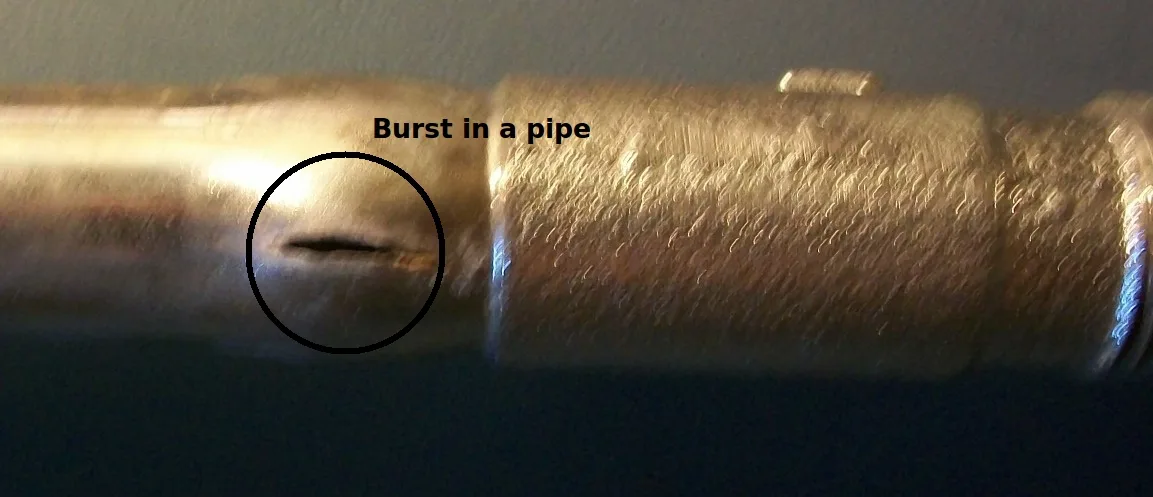
A burst supply line can release more water in an hour than a household uses in a day. The repair itself is plumbing; the damage control is a sequence anyone can execute. Here are the seven steps, in order, with the details that matter.
1. Shut off the main valve
Every adult in the house should know where it is before this day comes — typically where the supply enters, near the meter, or in a utility room. Turn clockwise until firm. Open the lowest tap in the house to drain what is in the lines. If the break is on a specific fixture line, the local stop valve behind the fixture is faster.
2. Kill power to wet areas
If water is anywhere near outlets, appliances or the panel, switch the affected circuits off. Do not stand in water to reach the panel — use dry shoes, a wooden platform or flip the main from a dry spot.
3. Drain and relieve
- Open hot and cold taps to empty the system
- Flush toilets once to drop tank water
- If the burst is in a frozen line, keep the tap open: melting ice needs somewhere to go
4. Stop the spread
Towels, blankets and a wet/dry vacuum on standing water; furniture lifted onto blocks; the burst area over bucketed if the main could not be closed fully. Move rugs — a wet rug on wet wood doubles the drying time.
5. Document like an adjuster
Photos and video of the burst section (before repairs), the water lines, each affected room and damaged items. Keep the failed pipe section — insurers sometimes want to see the failure point.
6. Start drying immediately
The 24–48 hour mold clock does not care that you are waiting for the plumber's next appointment. Air movers and a dehumidifier start the same day.
7. The repair and the cause
Repairs range from a compression coupling on a copper line to replacing a section of corroded galvanized pipe. Fix the cause, not just the break: water pressure too high, frozen lines without insulation, or aging pipe material predict the next failure — ask the plumber to check pressure (should sit around 3–4 bar) and insulate exposed runs.
Preguntas frecuentes
Where is my main shut-off valve?
Common locations: where the main enters the house (basement or utility room), near the water meter, or at the street-side access hatch. Find it today, tag it, and make sure it turns — a valve that has not moved in years can seize.
Do frozen pipes always burst?
No — but freezing is the top cause in cold snaps. Insulation on exterior-wall runs, letting taps drip during hard freezes, and heating kept above 10°C prevent most of it.
Will insurance cover a burst pipe?
Sudden bursts are typically covered including resulting water damage; long-term corrosion leaks may be excluded. The documentation from step 5 decides the claim.
In summary
Main valve, power, drain, contain, document, dry, then repair the cause. Seven steps — and knowing where the valve is before the burst is the one that makes all the others possible.